You’re standing before a judge in court, heart pounding. You’ve prepared for this case for months, but still aren’t sure you’re going to win. You’re stepping up to the witness stand, or being asked questions you don’t have the answer to, or you’re asking those questions. All of this while you’re still in high school.
Every year, the RV Mock Trial team does all these things at competition. They are given a case by the New Jersey State Bar Foundation, the NJSBF, and study it for months in the hopes of performing the best they can in competition and beating the other team.
This year the team gathered early in November to start looking over the case, and quickly began examining the witness statements and choosing roles. Some members stepped up into roles of witnesses and lawyers and began drafting examination questions and opening and closing statements. Others helped as researchers, assisting the case by going over the small details and picking out those that might be useful.
The team continued meeting every Monday and Tuesday to prepare. Everybody worked hard preparing questions and statements, repeating answers and practicing under the pressure of a timer in fake competitions known as mock mocks. Mr. Eiche, the mock trial club advisor, praised everyone’s hard work, saying, “My favorite moments are seeing the team rally together to overcome the various, often random challenges that occur yearly. This year, we had many students step up, sometimes out of their comfort zone, to fill in roles at the last moment.”
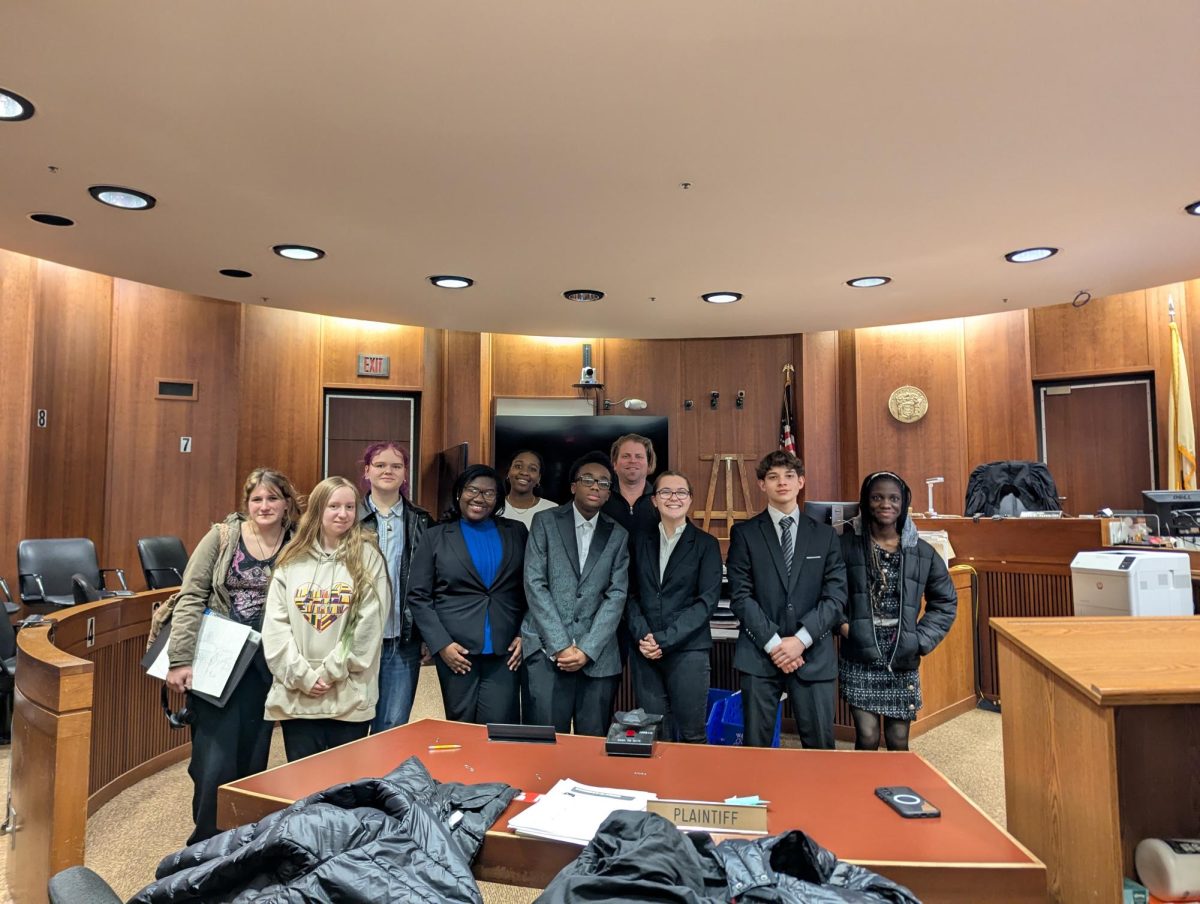
All the days of group brainstorming, question writing, and mock mocks paid off. Despite setbacks such as cancelled meetings and sicknesses, the team was prepared for the real competitions. Around the middle of January, the team met in front of the Burlington County Courthouse, did some last minute preparation, and headed in to face the other team.
When the team arrived at the courtroom, they spread out their notes on desks used by real lawyers and calmed their nerves by discussing strategy. Both sides had practiced hard for these competitions, and were judged by actual judges and lawyers who determined who wins the competition. Everyone was determined to do well and put all their effort and practice into the competition.
Eventually the judges entered, and the room fell silent. Both teams headed up to the judges stand, entered witness statements and exhibits into evidence, confirmed the rules of the competition, and then stepped back to start opening statements.
The competition went on for hours, lawyers asking questions, getting answers, objecting, or answering objections. Witnesses answered questions, trying to play their character well and remember all of the information they knew about their case. Everything went by in a blur as they rushed to finish before the timer cut them off.
Finally, the lawyers of both teams wrapped it up, giving their closing statements, and the judges stepped out to deliberate. Everyone was tense, making small talk with each other, waiting to see which side won.
That’s how the first two competitions went. The judges came out, having decided. They made some comments about the teams’ performance. They told everyone the results. The first competition our team lost. They lost the second one, too. The third time they went into the competition hoping that things will be different, and that they’d get a win. The third time, the other team broke the rules.
As usual, everyone headed into the courtroom, but this time the other team had a witness missing, and someone had to step in for them. Normally, when a person needed to fill a role is missing and their backup has to step up, they were treated like they had been studying and competing as that role the whole time. The same rules applied to them as would apply to the person they’re filling in for.
This time the other team requested to use notes in the competition, as the person filling in for the missing witness felt unprepared. Our team made a formal objection to the judges, but they still allowed the use of notes. In this case, judges were supposed to take points off for breaking the rules, however at the end of the trial our team lost, and it was unclear if they had done so.
After the competition ended and our team got the results, they made the situation known to the NJSBF, however they did not overturn the results of the match. To the mock trial team, it seemed as if the violation of the rules had been completely ignored. Still, they didn’t let the disappointment of the situation discourage them. Mr. Eiche said that he feels that the team handled the situation extremely well, and with pride and humility, stating that it makes for a great learning experience and life lesson.
The team went into the final competition of the first round hoping to do their best, but lost again. The string of losses this year meant that they didn’t move on to the next round of the competition, eliminating their chances of placing. Despite this, members of the team came out of this year’s competition content with how they performed and holding onto a list of positives. Amalia Deans, a senior on the team who played a defense lawyer this year said “I don’t take it to heart too much, I had a really great time despite wins and losses”. She felt like all the competitions could have gone either way and that winning depends on a lot of factors not in the team’s control. “I think that a lot of competition is determined by the judges that you have. Everyone prepares so much and knows so much and it really becomes a toss up with how the judge is feeling that day.”
After the loss, the whole team came together one last time to celebrate the season with pizza and snacks. They discussed the best moments of this year, and reflected on the disappointing moments. When asked about the team’s loss, club advisor Mr. Eiche encouraged people to look past winning and losing, saying “Despite some discouraging results as far as wins and losses the past couple of seasons, I am proud of the way the members of the team have learned and grown during this time. Truthfully, winning is great, and as competitors, everyone on the team wants to win as much as possible. However, the value of the team goes beyond that, and the work, preparation, camaraderie and collaboration throughout the season is a positive experience.”
The members of the mock trial team had a good time despite not winning, and feel that even if they lost, the effort they put in was worth it. Despite challenges, the team worked hard this year, pushed themselves to be better, and earned every bit of their celebration.